


BEST PRACTICES
We bring you a curated selection of inspiring collaborations between cultural institutions and creative professionals. Discover examples of good practice from across Europe
(and sometimes beyond) and feel free to share your own tips and recommendations with us.
All
Apps & games
Merch
Experience
Scenography / tech
Others
merch
CHOCOLATE FACTORY JORDIS, MARTIN KAISER
Museum of Eastern Czechia in Hradec Králové
Jordi's Chocolate
Martin Kaiser
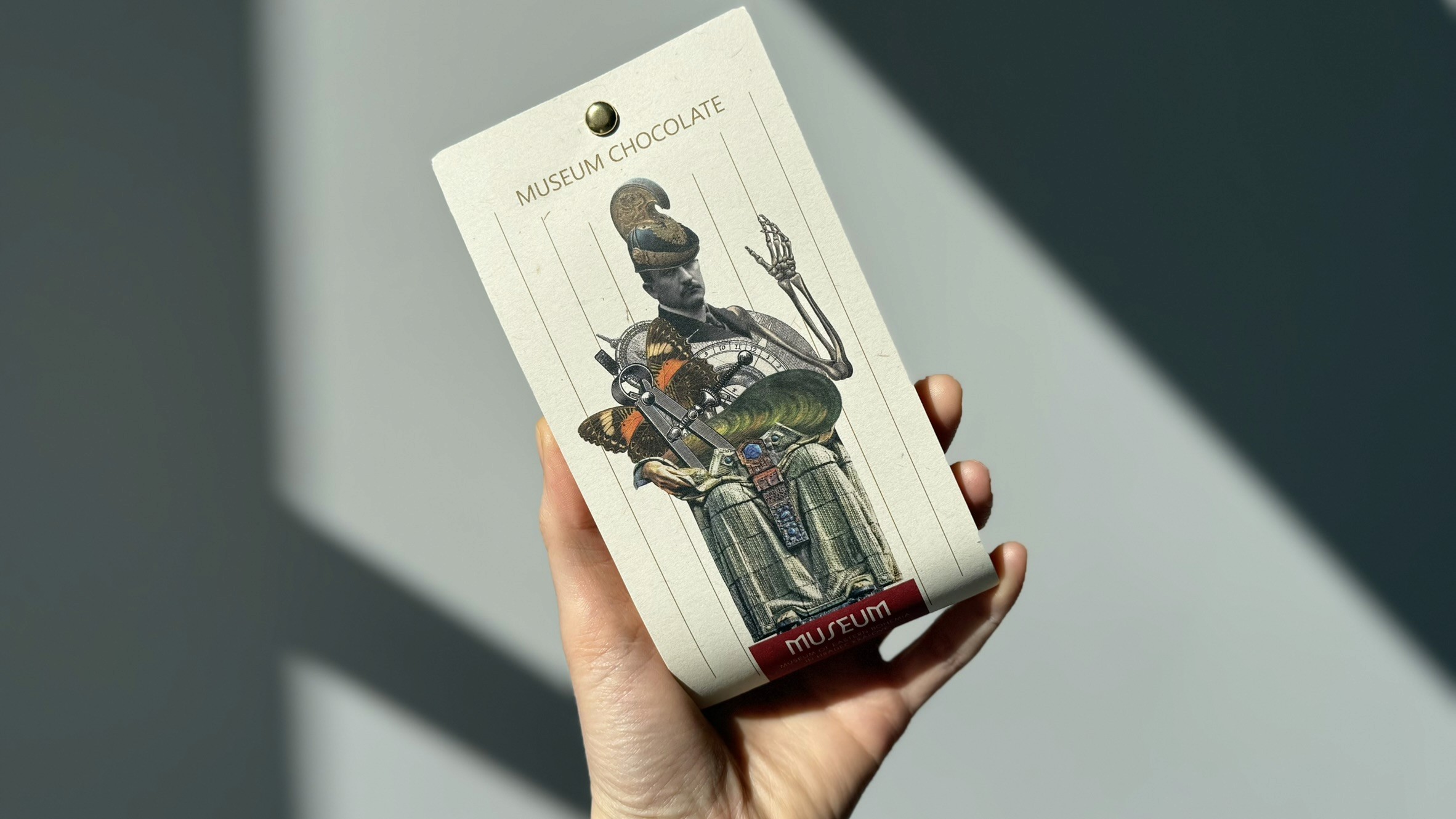
Museum of Eastern Czechia in Hradec Králové initiated the creation of original museum merchandising that would communicate the identity of the institution and its story in a contemporary and attractive way. For this purpose, it established cooperation with the local artisan chocolate factory Jordi's Chocolate and the artist Martin Kaiser. The aim was to create a product that connects cultural heritage, contemporary art and local production.
The result of the cooperation is an original chocolate, the visual appearance of which was created based on an original illustration by Martin Kaiser inspired by the architecture, collections and symbolism of the museum. The artistic design does not only fulfill a decorative function, but also functions as an interpretive medium that conveys the story of the institution through visual language.
The Jordi's chocolate factory ensured the artisanal production of the product with an emphasis on quality, local context and aesthetic processing. The project represents an example of interdisciplinary cooperation between a cultural institution, an artist and a local producer and contributes to the development of innovative forms of communication of the museum towards the public and to strengthening the relationship with the region.
Location:
Hradec Králové
🇨🇿
merch
TOTEBAG
Museum of Eastern Czechia in Hradec Králové
Secondary school of Visual Arts in Hradec Králové
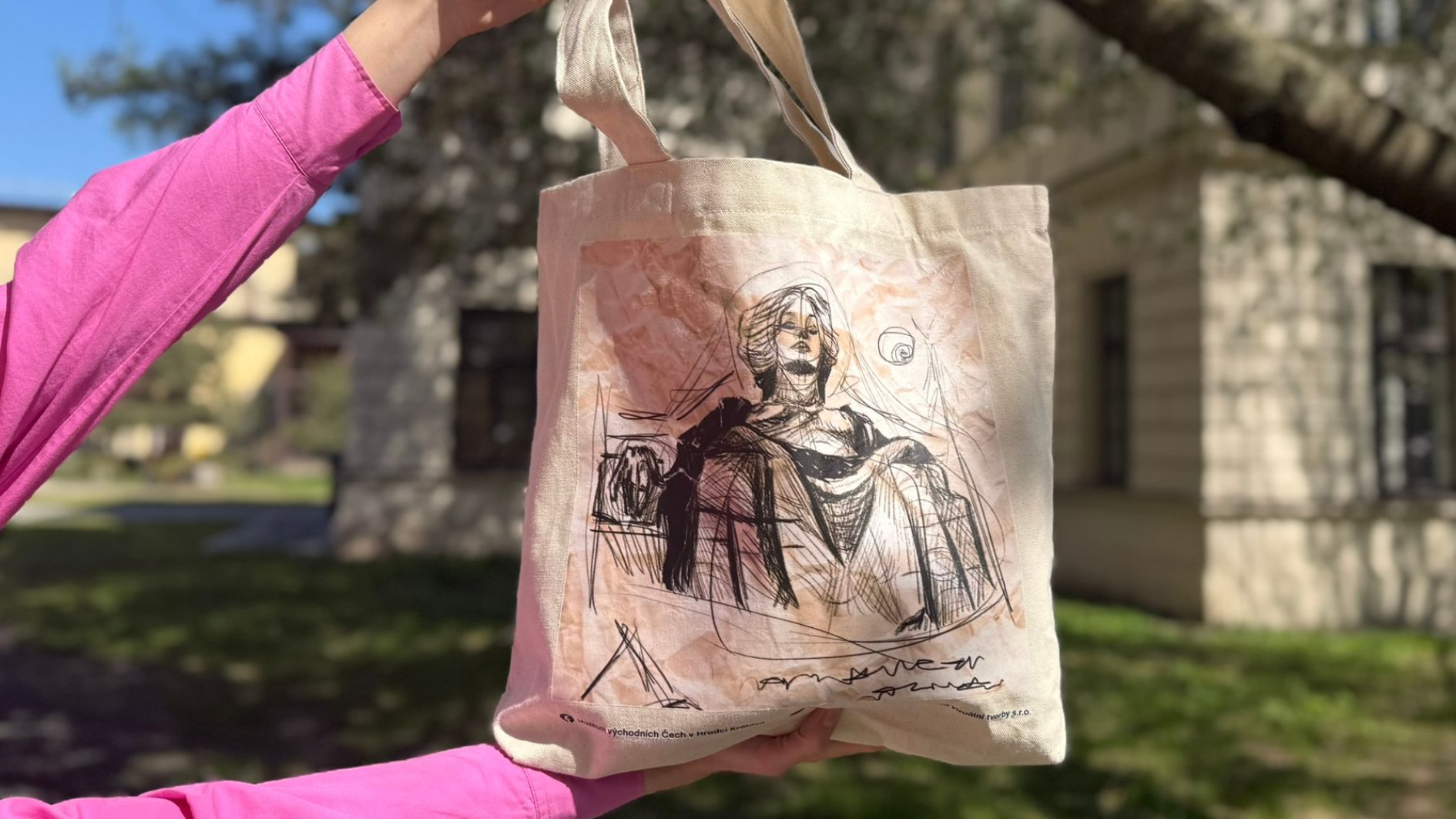
At Museum of Eastern Czechia in Hradec Králové, we've been looking for fresh and original promotional items.
So we opened up the museum's history to students from Secondary school of Visual Arts, who brought creativity and a fresh perspective to it.
From many great designs, we at The Centre for Creative Museology of the Hradec Králové Region selected this one (while others remain in the drawer) and brought it to life as a CANVAS TOTE BAG.
Get yours on our e-shop or directly in the museum shop.
Location:
Hradec Králové
🇨🇿

apps & games
GAME APP, THE MICE FROM VESELÝ KOPEC
Vysočina Open-Air Museum
Get Out Fun
The Vysočina Open-Air Museum, in cooperation with Get Out Fun, developed a digital visitor game designed for families with children. The game is available to all museum visitors via a QR code.
The project represents a successful example of cross-sector collaboration between a cultural institution and a private company.
The museum contributed the narrative framework, background texts for the individual buildings and exhibits, as well as photographs and illustrations. The initial design of the main characters was created by the museum's illustrator, while artificial intelligence was subsequently used to produce the final visual materials. The museum also provided expert consultation to ensure the accuracy of the information presented throughout the game.
Get Out Fun was responsible for the technical and game-design aspects of the project. The company provided the digital platform, designed the puzzles, developed the game itself, and promoted it through its website. The collaboration also included a promotional package, access to the game evaluation interface, and external testers prior to the launch of the game.
One of the principal benefits of the partnership was the company's expertise in creating interactive visitor experiences and the availability of an existing digital platform, which significantly reduced development costs.
Another advantage was the fresh and unbiased perspective brought by external designers who were not directly connected to the museum sector. The involvement of external testers also proved valuable. Furthermore, the close cooperation between the museum and the game developer enabled continuous revisions of the puzzles, texts, and visual materials throughout the development process until the final launch.
The collaboration, however, also involved certain limitations. As access to the game is provided through the company's platform, users are required to register and log in. In addition, the museum has only limited possibilities to modify the platform's functions and technical features.
Location:
Hlinsko v Čechách
🇨🇿

apps & games
GAMING at the ZOO
Singapore Zoo
Microsoft
Studio Supply+Demand
Gaming at the heart of a Zoo?
As museums, it's tempting to look at other museums or galleries for inspiration, "how are they doing things?" But what if we start learning or even collaborating with others, especially those operating in entirely different worlds?
One institution that demonstrates this remarkably well is the Singapore Zoo, better known as Mandai Wildlife. While a zoo may at first seem distant from the museum world, it shares many similarities as a curated, educational, and narrative-driven public space. What makes the ideas and actions of this zoo especially relevant for museum professionals is found in how it continuously collaborates across disciplines to rethink audience engagement, learning, sustainability, storytelling, and public value. The result is an inspiring example of how cultural institutions can evolve by opening themselves up to ideas, expertise, and creative energy from entirely different worlds. Following is just one example of Mandai's many cross-sector collaborations with diverse partners based on compatible goals, mutual interest and innovation drivers.
Zoos are historically popular with families with young children and younger teenagers (who are usually visiting during school trips). Older teens and young adults however are a famously difficult demographic for wildlife parks to engage.
In April 2026, Mandai Wildlife Reserve took a 'cross-sectoral leap' when it collaborated with Mojang Studios, (yes, the creators of Minecraft, the best-selling video game in history), Microsoft, and a Canadian multimedia design studio called Supply+Demand, to host the first 'Minecraft Villager Rescue' in Asia.
Minecraft Village Rescue is a real-life, 1-hour immersive adventure where players enter life-sized, projection-mapped rooms to physically mine resources, fight mobs, and rescue a blocky village.
Hosting this physital (part real life, part digital) at the heart of Mandai Wildlife surrounded by the zoo and other Wildlife parks gives Mandai the opportunity to tap into an massive pool of gamers, drawing the 'hard to get' tech-centric demographics to a nature reserve who might otherwise never purchase a zoo ticket.
Gamers of all ages turn into real-life heroes in an immersive and interactive experience as they journey through eight Minecraft rooms to rescue a village under siege from a zombie attack. The Minecraft experience package is bundled with entry to the Singapore Zoo, Bird Paradise, and River Wonders.
Two months in, the Minecraft Villager Rescue has been highly successful, generating massive traction and positive public reception, showing that the zoo's strategic bet on bringing together a Wildlife experience with a gaming experience has paid off. The event has achieved a strong 4.5 out of 5-star rating based on visitor reviews. But most importantly, it has created a strong pull for families with older children, as well as teenagers, and adult gamers to visit its Wildlife parks.
Location:
Singapore
🇸🇬

scenography, graphics, tech in exhibitions
THE ORIGINAL EXPERIENTIAL INSTALLATION IN THE CHURCH
Hradecko Destination Company
Dominika Špalková, Barbora Hodonická, Viktorie Vášová, Ian Mikyska, Šárka Zahálková, Lucie Nováková, Zewll
The original experiential installation titled Divotvornosti (Wonderings) was opened in spring 2026 by the Hradecko Destination Company. It is an audiovisual installation that combines history, contemporary artistic expression, and the atmosphere of the unique interior of the Church of St. Nicholas in Hradec Králové. The installation tells a powerful story about the construction of the wooden church, which was relocated several times throughout its existence and whose roots trace back to eastern Slovakia. The themes of journey, memory, and transformation became the central thread of the entire exhibition.
Divotvornosti does not function as a conventional historical exhibition. Instead of a standard interpretive display, it offers visitors an experience that engages hearing, imagination, and spatial perception.
The installation was created by an artistic team consisting of Dominika Špalková, Viktorie Vášová, Ian Mikyska, and Šárka Zahálková. Production was managed by Barbora Hodonická, while expert consultation was provided by Lucie Nováková. Preparations for the project also included a study trip to eastern Slovakia.
Location:
Hradec Králové
🇨🇿

experience
NANOQ ESCAPE GAME
Arctic Museum Nanoq
Local creative game developers
Seeking to re-engage corporate teams and younger business audiences, the Arctic Museum Nanoq collaborated with local creative game developers and regional companies to launch "Nanoq Escape."
Instead of a traditional indoor escape room, this project transformed the museum's historic outdoor arctic cottages into a sprawling, site-specific historical mystery game. Corporate teams must solve puzzles, unlock cabins, and learn about polar expedition history to achieve their goals.
The concept has become a highly sought-after local team-building package that provides the museum with a steady stream of B2B revenue while offering businesses an unconventional corporate wellness activity.
Location:
Jakobstad / Pietarsaari
🇫🇮

apps & games
FACES OF WAR 1866
Museum of Eastern Czechia in Hradec Králové (Museum of the 1866 War)
Charles Games
The Museum of Eastern Czechia in Hradec Králové initiated a digital transformation of the newly renovated Museum of the 1866 War on the Chlum battlefield.
Following a comprehensive 20 million CZK restoration of the site, the museum wanted to move beyond traditional, static military maps to highlight the individual human tragedies of the Austro-Prussian conflict. For this purpose, they partnered with Charles Games to co-create a cutting-edge digital companion.
The collaboration led to the development of the mobile application Faces of War 1866 (Tváře války 1866). This interactive companion uses illustrated comics and location-based augmented reality (AR) to tell the personal stories of military and civilian characters who lived through the war. Visitors directly on the battlefield can scan QR codes to bring history to life, transforming the battlefield visit into an immersive narrative experience for the 21st century.
Location:
Hradec Králové - Chlum
🇨🇿

experience
HERITAGE AS A SERVICE
Stundars Open-Air Museum
Regional craftsmen, creative designers and businesses
BBH network
Stundars Open-Air Museum partnered with regional craftsmen, creative designers, and businesses within the BBH network to build commercial "Heritage-as-a-Service" products. Moving away from standard tourism, they co-created hands-on historic corporate well-being days where company employees practice traditional 19th-century industrial and maritime crafts alongside master artisans.
The Stundars open-air museum offers companies and groups for instance an experience-based and culturally enriching service called "Kaffi tå! – Århundradets kärlekssaga" (loosely translated as "Coffee time! – The love story of the century"). This museum-based educational activity takes participants on a time travel journey to the early 1900s and combines traditional cultural heritage with modern gamified learning. Kaffi tå! is inspired by escape room games, but instead of trying to escape, the goal is to save the maid Lina from an unhappy marriage. The story takes place in the museum village of Stundars. Lina is caught between two suitors, the young farmhand August and a wealthy farmer.
Location:
Solf / Sulva
🇫🇮

experience
BRINGING HISTORY TO LIFE THROUGH PUPPETS
Wallenstein Loggia
Handcrafters - Marek family
The Wallenstein Loggia in Jicin is much more than a restored Baroque monument. Over the years, it has evolved into a vibrant cultural centre where history, theatre and community come together through exhibitions, performances, festivals and creative workshops.
With support from the Creative Voucher Scheme of the Hradec Králové Region, the Wallenstein Loggia partnered with the Marek family puppet workshop, well known for its traditional craftsmanship and artistic approach to puppet making. Together, they created original puppets representing important historical figures connected with the Loggia and its story.
The puppets were designed specifically for a new theatrical production that introduces visitors to the history of the site in an engaging and accessible way. Instead of presenting historical facts through conventional interpretation, the project transforms local heritage into a living experience where storytelling, visual art and craftsmanship inspire audiences of all ages.
This collaboration is a great example of how cultural heritage institutions and independent creative professionals can jointly create new cultural value. By combining traditional puppet-making with site-specific theatre, the project strengthens the connection between the monument and its visitors while preserving and promoting local artistic traditions.
The initiative demonstrates how even a relatively small financial contribution can spark meaningful cross-sector cooperation and produce a lasting cultural outcome. The newly created puppets will continue to be used in future performances and educational programmes, ensuring that the project's impact extends well beyond its initial implementation.
Through this partnership, the Wallenstein Loggia has enriched its cultural programme with an original artistic format that makes the history of this remarkable Baroque landmark more vivid, memorable and accessible for future generations.
Location:
Jičín
🇨🇿

apps & games
PLAYING PRAGUE
Prague City Tourism
Charles Games
Prague City Tourism initiated a project to introduce tourists to the capital's lesser-known history, monuments, and historical figures in an engaging, playful format. To disperse tourism from overcrowded central quarters, they sought a digital tool that would appeal to a wide range of audiences. For this purpose, they established cooperation with Charles Games, a Prague-native game studio specialized in narrative and historical gaming.
The result of this collaboration is Playing Prague, a mobile puzzle game where players explore Prague's historical quarters and interact with notable figures from Prague's history. The game successfully bridges cultural heritage with gamification, surpassing 100,000 downloads and earning prestigious accolades like the CEEGA Award for Best Mobile Game of 2025 and the Tourism Grand Prix. A recent content expansion added 10 brand-new levels, global leaderboards, and an achievement system, ensuring long-term replayability and continued visitor engagement.
Location:
Prague / Praha
🇨🇿

scenography, graphics, tech in exhibitions
(IN)VALUABLE WITNESSES
Museum of the Broumov Region
Terezína Černohorská, Martin Černohorský
The seasonal exhibition (in)VALUABLE WITNESSES has been developed as a project of the Museum of the Broumov Region. Thanks to Ivana Valášková, who arranged the connection with the museum's director, Michal Bureš, Terezína Černohorská eventually joined the project as the exhibition's visual artist and graphic designer.
Besides the exhibition layout and architecture, she created a series of drawings based on the displayed objects, some of which were used as ornamental motifs tying into the graphic design, as well as the technical drawing for a new display case, built in the carpentry workshop in Broumov as part of the exhibition's preparation.
Martin Černohorský, an AV media and technology specialist, also took part in the preparations. Together they designed the soft, dimmable lighting for the display cases (a solution the museum now uses across its exhibition projects), as well as a multimedia coda to a detective story, which functions within the exhibition as an interactive element.
This collaboration is a first step and hope to return to Broumov next time. Working in the beautiful monastery that houses the museum has already sparked further ideas for imaginative use of such a striking space. Ideas that stay legible and accessible for a conservative local audience while gradually expanding what visitors can, and should, expect from a museum and cultural experience.
Location:
Broumov
🇨🇿

scenography, graphics, tech in exhibitions
OSTRAVA CAFÉ: FROM MUSEUM EXHIBITION TO COMMUNITY PARTNERSHIP
Ostrava Museum
Renata Slámková, Jan Albrecht
Laura Coffee
Ostrava Museum developed the exhibition Ostrava Café to explore a lesser-known aspect of the identity of Ostrava, a city primarily associated with coal mining and steel production. Despite its industrial character, Ostrava was an important centre of café culture, especially before the Second World War. The project offered an opportunity to connect this history with the contemporary life of the city.
The exhibition was created through cooperation between the museum, creative professionals and local businesses. The museum provided historical research, collections and expert content. Exhibition designer Renata Slámková and architect Jan Albrecht transformed this material into an engaging visitor experience and translated historical themes into a contemporary visual language. Their work helped make the exhibition attractive and accessible to younger audiences.
To explore present-day café culture, the museum identified 54 cafés in the city centre and contacted all of them. Twenty-four responded to the survey, and fifteen eventually lent objects to the exhibition. Establishing these relationships required considerable personal engagement: museum staff visited many cafés, introduced the project face to face and gradually built trust with their owners and teams.
A particularly strong partnership developed with Laura Coffee, a local coffee roastery and café. It became an official exhibition partner, lent equipment and now organises workshops on coffee culture and coffee preparation. Through this partnership, Ostrava Museum also took part in the Barista Cup coffee festival for the first time in its history, reaching people beyond its traditional visitor base.
One month after the exhibition opened, the museum recorded its highest monthly attendance in eight years and observed a noticeable increase in younger and middle-aged visitors. The most lasting outcome, however, is the network of relationships created between the museum, creative professionals and local businesses. Ostrava Café demonstrates how a museum can become an active platform connecting cultural heritage, creativity, business and contemporary urban life.
Location:
Ostrava
🇨🇿
scenography, graphics, tech in exhibitions
DELICATE MATTERS
Museum of Eastern Czechia in Hradec Králové
Studio 3dsense
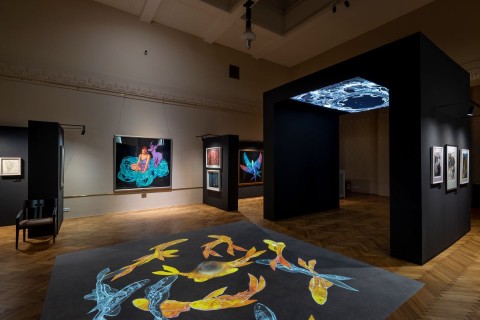
In 2024, the Museum of Eastern Bohemia in Hradec Králové organised a successful exhibition by the world-renowned printmaker and painter Míla Fürstová, whose works are highly acclaimed and represented in both Czech and international collections, including that of Queen Elizabeth II. The exhibition in Hradec Králové aimed to introduce visitors to the artist and her work in the most comprehensive way possible. It featured works from her secondary school years, as well as from the period when she taught at the prestigious school in Cheltenham and when she created the cover artwork for Ghost Stories, an album by the British band Coldplay.
The entire exhibition space was complemented by an audiovisual installation created by 3dsense Studio, which enriched the overall atmosphere of the exhibition. Specifically, one of the artist’s works, Golden Fish, was digitally processed and, using LiDAR technology, projected onto the floor to create the visual effect of swimming fish.
This striking feature contributed to a modern approach to the presentation of contemporary visual art and further enhanced this significant exhibition project with an international reach.
Location:
Hradec Králové
🇨🇿

merch
HERBAL WITCH CREAM
Museum of Jeseník Region
Naturfyt - Bio
Students from T-expedition of Jeseníky Region
The herbal touch of the Jeseníky Mountains inspired by a 17th-century recipe. The Museum Herbal Cream connects regional heritage, traditional herbal knowledge, and contemporary product design into one unique collaboration.
Herbal witch cream was developed by Museum of Jeseník Region in cooperation with cosmetics and medical manufacturing company Naturfyt Bio and a research programme for gifted students from T-Expedice Jeseníky.
The cream combines historical inspiration with modern natural cosmetics production. The custom graphic identity and original packaging design was made by PR specialist Zuzana Pavlů.
This product is also a tribute to the unjustly persecuted victims of early modern witch trials and a reflection of the rich natural and cultural heritage of the Jeseníky region.
The idea was initiated by the museum director Pavel Rušar and taken up by two participants and guarantors of the research program, sisters Šárka and Michaela Holerová and their young colleagues from the t-expedition research section. The creation of the cream was developed by the partner cosmetic company Naturfyt Bio and was supervised by Ondřej Janík. The creation of witch cream is based on the study of archival sources from the period of early modern witch trials.
The product demonstrates how museums can creatively work with cultural heritage beyond exhibitions - transforming historical knowledge into contemporary, tangible experiences that engage wider audiences across sectors, from culture and education to local entrepreneurship and sustainable production.
Location:
Jeseník
🇨🇿

apps & games
DETECTIVE GAME: MISSING SON
Museum of the Broumov Region
Michaela Šeneklová
The Museum of Broumov has created an interactive detective game for visitors, set within the contemporary exhibition (in)VALUABLE VITNESSES. The game combines a fictional story with real historical background of the Broumov Region.
The story is set in the year 1901 and begins with an introductory letter from Antonín Berka, a farmer from the village of Hlavňov. In the letter, he asks the players for help in finding his son, who has suddenly disappeared from home. After reading the letter, visitors receive instructions and enter the exhibition to begin their investigation. Their task is to follow the clues, examine selected objects and gradually find out the whole story.
The game takes place in all three exhibition rooms. Objects that are relevant to the investigation can be handled by the players. These objects are marked with a special symbol, which helps visitors distinguish them from objects that should not be touched. The players work through a series of clues, with the individual elements of the game connected to one another. In this way, the investigation gradually develops until the players can reach a conclusion.
The game was created in cooperation with Michaela Šeneklová, who specialises in creating escape rooms and other interactive games. Mrs. Šeneklová designed and created the individual clues used in the game and worked out how they should connect and follow one another so that the investigation would form a coherent whole. She also worked with the museum on developing the fictional story and its structure.
The Museum of Broumov provided the historical background and content for the game, drawing on the objects and information presented in the exhibitions. Together with Mrs. Šeneklová, the museum selected and adapted these elements for use in the detective game and determined how they could become part of the investigation. The cooperation thus involved both the development of the story and the practical design of the individual game elements.
Location:
Broumov
🇨🇿

scenography, graphics, tech in exhibitions
HUMANISING HEALTHCARE TECHNOLOGY
Rijksmuseum
Philips
Since 2001, the Rijksmuseum (the National Museum of the Netherlands) and Philips have closely worked together to connect people and art. Philips helped the the almost 230 years old museum to boost the visitor experience, optimise artwork conservation through lighting, and increase global audience engagement.
But the relationship between the Rijksmuseum and Philips is not a one-way street.
While Philips provides the technological know-how to modernise the museum and enhance its experience, the Rijksmuseum in return provides intellectual property and creative assets that Philips needs to humanise its healthcare technology.
Take medical examinations such as MRI scans. Such tests patients go through a tight, enclosed space with loud and unpredictable mechanical noises, and the strict requirement to stay perfectly still for 20 to 90 minutes. This often trigger claustrophobia, panic, or a feeling of helplessness. Philips joined forces with curators from the Rijksmuseum to make terrifying MRI scans less stressful by turning the medical tubes into digital art galleries.
The museum’s curation team handpicked timeless, soothing masterpieces by Rembrandt and Vermeer, adapting them into gentle, flowing animations. They carefully paired these moving visuals with comforting classical music from composers like Beethoven.
Inside the machine, patients watch these beautiful projections and listen to the music through headphones. This creative teamwork completely transformed the experience. By shifting a patient's focus from hospital anxiety to world-class art, the collaboration with the museum helps to calm nerves, keep patients completely still, and prove that arts and culture can be a powerful tool for healing.
Location:
Netherlands
🇳🇱

Merch
BRINGING THE HISTORY OF THE EGGLE MOUNTAINS TO LIFE
Prokreativitu
Green Mango
Radek Drahný, Tomáš Chlud, Bohumír Dragoun
How can local history become relevant and engaging for a younger generation? This project brought together historical heritage and creative storytelling to create a new way of discovering the history of the Eagle Mountains.
The result is a richly illustrated comic book presenting twelve stories inspired by real people, events and traditions from the region. From the first inhabitants and glassmakers to smugglers, craftsmen, industrialists and the early days of skiing, the stories reveal the diverse and sometimes dramatic past of the mountains.
The project demonstrates the potential of cooperation between cultural heritage and the creative industries. Historical knowledge and research were transformed into an accessible visual narrative, making local heritage easier to understand and more attractive to children and young people.
Rather than simply telling young readers about history, the project gives them characters, stories and images through which they can discover the place they live in. It shows how creative approaches can help cultural heritage reach new audiences and strengthen their connection to the region.
Location:
Orlické hory
🇨🇿

Merch
MUSEUM HERBAL TEAS
Museum of Eastern Czechia in Hradec Králové
AlchyHerb
Martin Kaiser
Museum of Eastern Bohemia in Hradec Králové wanted to include something in its museum shop that would bring visitors a sense of comfort and pleasant memories even after they returned home. This gave rise to the idea of creating its own herbal blend with a touch of history.
The result was two unique teas: A CUP FULL OF MEMORIES AND AN OLD EXCAVATION
A CUP FULL OF MEMORIES (ŠÁLEK PLNÝ VZPOMÍNEK) is inspired by the history of the museum itself and its collections. The tea blend is designed to stimulate and refresh your memory, whether you are studying or working.
AN OLD EXCAVATION (STARÁ VYKOPÁVKA) literally means ″an old excavation″, but in Czech it can also be used as a rude or humorous term for an elderly person, typically someone in their eighties. So, you can use these words either to insult someone or, humorously, to refer to archaeological finds.
To preserve the local character of the project, the museum approached the local company AlchyHerb, founded by pharmacist and phytotherapist Mgr. Jindřich Čech. AlchyHerb is a company focused on herbal teas and supplements based on current clinical studies and evidence-based phytotherapy.
Following the positive experience with their previous collaboration, Martin Kaiser (a graphic designer) was approached once again to create the original illustrations for tea packaging.
Location:
Hradec Králové
🇨🇿